The pursuit and apprehension of suspects involved in violent crimes against law enforcement personnel require swift investigative action, heightened coordination across multiple jurisdictions, and rigorous adherence to standard operating procedures. In the jurisdiction of Banten, regional law enforcement authorities successfully concluded a rapid manhunt following a violent hit-and-run incident that left two members of the Banten Regional Police Highway Patrol, locally known as Patroli Jalan Raya (PJR), severely injured. The incident occurred along a critical commercial artery, the Serang-Panimbang Toll Road, specifically at Kilometer 70.
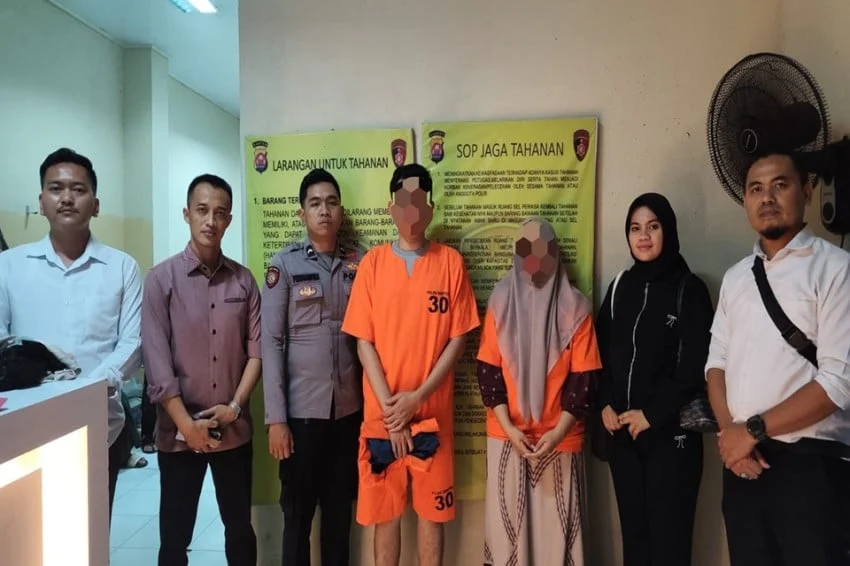
According to official statements released by the Banten Regional Police, the operation resulted in the apprehension of two primary suspects identified by their initials, ED and AM. The suspects, who share a romantic relationship and are officially engaged to be married, were taken into custody during coordinated raids conducted by specialized criminal investigation units in two separate geographical areas within the province. ED was located and detained in the Pandeglang regency, while AM was apprehended in a separate operation within the Serang regency.
The violent episode underscores the escalating risks encountered by traffic police officers during routine roadside interventions, vehicle checks, and enforcement operations on high-speed national and regional toll road networks. As commercial traffic and private vehicle density continue to increase across Indonesia’s rapidly expanding toll road infrastructure, incidents involving motorists attempting to evade law enforcement through reckless and violent means have emerged as a significant operational concern for regional traffic directorates.
Chronology of the Incident on the Serang-Panimbang Toll Road
The sequence of events leading to the hospitalization of the two PJR personnel unfolded during a routine highway surveillance and patrol operation. Traffic officers assigned to the Banten Regional Police PJR unit were conducting standard monitoring duties along the Serang-Panimbang Toll Road when they identified a stationary vehicle parked irregularly on the emergency shoulder, commonly referred to as the emergency lane.
The vehicle, a Daihatsu Xenia multipurpose vehicle, was parked in a manner that attracted the attention of the patrolling officers, prompting them to execute a standard investigative stop. Parking on the emergency shoulder of a toll road is strictly regulated under Indonesian traffic laws, permitted only in genuine mechanical emergencies or medical distress. Consequently, the officers approached the vehicle to check on the welfare of the occupants and ascertain the reason for the unscheduled stop.
As the officers initiated contact, the situation escalated rapidly. Rather than complying with lawful instructions, the driver of the Daihatsu Xenia exhibited signs of severe panic. Preliminary police findings indicate that the driver, overwhelmed by the sudden approach of law enforcement, made a split-second decision to flee the scene rather than face potential administrative or legal scrutiny.
In a reckless maneuver, the driver accelerated the vehicle while one of the PJR officers was still positioned directly in front of the automobile. The impact caused the officer to be propelled onto the front hood of the moving vehicle. Instead of applying the brakes to prevent further injury or to allow the officer to dismount safely, the driver continued to accelerate. Eyewitness accounts and police reconstruction indicate that the vehicle sped along the toll road with the officer trapped on the hood for a distance of approximately three kilometers.
During this high-speed traversal, the driver engaged in aggressive driving maneuvers designed to dislodge the officer from the vehicle. Eventually, the officer was thrown from the moving car onto the asphalt surface of the toll road, sustaining severe physical trauma. A second responding officer was also injured during the chaotic sequence of events as the vehicle forced its way past the patrol position and fled the toll road entirely, disappearing into the surrounding regional road network.
Investigation, Identification, and Apprehension of Suspects
Following the violent escape, the Banten Regional Police launched an immediate and comprehensive investigation. The case was categorized as a high-priority offense due to the direct assault on law enforcement officers performing their constitutionally mandated duties. Investigative teams from the Banten Regional Police Criminal Investigation Directorate, working in tandem with traffic accident analysis specialists, deployed advanced forensic techniques, including the review of closed-circuit television (CCTV) footage obtained from toll road operators, electronic license plate recognition systems, and witness testimonies gathered from motorists who witnessed the harrowing pursuit.
The gathered digital evidence and forensic markers quickly allowed investigators to identify the registered owner and the physical characteristics of the Daihatsu Xenia involved in the incident. Armed with this intelligence, tactical units established a dragnet across potential escape routes and known addresses associated with the vehicle’s registration.
Head of Public Relations for the Banten Regional Police, Senior Commissioner Maruli Ahiles Hutapea, provided formal details regarding the apprehension during a media briefing. He confirmed that the two suspects, ED and AM, were successfully cornered and arrested in separate tactical raids.
"The driver has admitted during initial interrogations that panic set in upon the approach of our officers, leading to the decision to attempt an escape," Senior Commissioner Maruli stated. "Even after realizing that an officer was physically trapped on the front section of the vehicle, the driver continued to force the car forward at high speeds for a distance of approximately three kilometers, completely failing to render any form of assistance to the stricken victim."
The fact that the two suspects are engaged to be married added a personal dynamic to the unfolding legal proceedings, though investigators emphasized that familial or romantic relationships would have no bearing on the rigorous application of criminal law. Both individuals are currently undergoing intensive interrogation to determine the exact motive behind their erratic behavior on the emergency shoulder, whether they were in possession of illicit substances or contraband at the time of the stop, and the precise division of actions between the driver and the passenger during the violent flight.
Condition of the Injured Officers and Medical Response
The human toll of the incident has been a focal point for the leadership of the Banten Regional Police, who have extended full institutional support to the affected officers and their families. Both victims were rushed to a regional medical facility immediately following the incident to receive emergency trauma care.
Medical bulletins indicate that while both officers sustained multiple contusions, lacerations, and orthopedic injuries from being thrown onto the pavement at high speed, one of the officers bore the brunt of the violence. This officer suffered extensive internal trauma and severe fractures, requiring specialized surgical intervention and continuous monitoring in an intensive care environment.
Senior Commissioner Maruli confirmed that as of the latest medical updates, the more seriously injured officer remains hospitalized under the care of a multidisciplinary team of medical specialists. The psychological impact of the incident on the wider patrol unit has also been addressed, with peer support and counseling services made available to personnel who routinely face unpredictable hazards on high-speed transit corridors.
Broader Context of Toll Road Safety and Law Enforcement Risks
The violent confrontation on the Serang-Panimbang Toll Road highlights systemic challenges related to security, law enforcement protocols, and driver behavior on Indonesia’s toll road network. The Serang-Panimbang toll corridor itself is a vital infrastructure project designed to stimulate economic development, tourism, and regional connectivity across Banten province, linking urban centers to remote coastal regions such as Tanjung Lesung. However, increased vehicular throughput invariably brings a rise in traffic violations, vehicular breakdowns, and criminal opportunities.
Data compiled by national traffic safety organizations indicate that emergency shoulders on toll roads are frequently misused by drivers for resting, making phone calls, or conducting minor repairs without proper safety markers. Such practices not only violate traffic regulations under Indonesian road transport laws but also create severe traffic hazards that necessitate frequent interventions by highway patrol units.
When police officers approach vehicles parked improperly on emergency lanes, they frequently encounter volatile situations. Motorists operating unregistered vehicles, driving without valid licenses, transporting stolen goods, or evading warrants often react with disproportionate panic or aggression. This dynamic exposes traffic police officers to extreme occupational hazards, as they routinely operate in exposed environments without the heavy physical barriers that protect officers during static checkpoint operations.
Legal Implications and Anticipated Charges
From a legal perspective, the actions of the suspects transcend standard traffic violations, elevating the case into the realm of serious violent crime. Under the Indonesian Criminal Code (KUHP) and the National Traffic and Road Transportation Law (UU Lalu Lintas dan Angkutan Jalan), individuals who intentionally direct a motor vehicle in a manner that causes physical injury, grievous bodily harm, or endangers the lives of law enforcement officers face severe penal consequences.
Legal analysts and observers note that the suspects could be charged under multiple statutory provisions. These may include provisions related to violent assault against public officials executing their lawful duties, reckless driving resulting in severe injury, and criminal negligence accompanied by a failure to render aid to an accident victim—a violation that carries distinct penal sanctions under Indonesian transportation statutes.
Furthermore, the deliberate continuation of driving with a human being trapped on the hood of the vehicle provides prosecutors with compelling evidence of willful disregard for human life, potentially opening the door for charges of attempted manslaughter or aggravated assault resulting in severe bodily harm. The meticulous gathering of physical evidence, medical reports, and digital telemetry from the vehicle will form the backbone of the prosecution’s dossier as the case moves from the investigative phase to the judicial system.
Institutional Response and Future Preventative Measures
In the wake of this violent encounter, the leadership of the Banten Regional Police is reviewing operational protocols for highway patrols to enhance officer safety. Discussions are reportedly underway regarding the increased deployment of tactical support vehicles, enhanced dashcam and body-worn camera utilization, and stricter protocols for approaching stationary vehicles on high-speed corridors.
The incident also serves as a stark reminder to the broader motoring public regarding the legal and moral imperatives of compliance with law enforcement directives. Public awareness campaigns emphasizing that attempts to evade police checkpoints through violence invariably result in catastrophic legal consequences are expected to be reinforced across regional media channels.
As the judicial process advances, the Banten Regional Police have pledged absolute transparency, ensuring that the suspects face the full weight of the law. The swift apprehension of ED and AM within days of the incident demonstrates the operational readiness of regional investigators, yet the lingering hospitalization of the patrol officer serves as a sobering testament to the daily perils faced by those tasked with maintaining order on the nation’s highways.